
Ignore anxiety too long, and it doesn’t just stay in your head—it hijacks your life.
Your confidence gets shaky. Your relationships feel harder. Making decisions starts to feel like walking through quicksand. But it doesn’t have to stay this way. In this blog, you’ll learn how to stop feeding fear and start reclaiming your mental freedom.
If you’ve been wondering how to remove anxiety and fear from your mind in a way that actually works—without having to meditate for hours or pretend everything’s fine—keep reading. We’re going to walk through 8 real tools to help you quiet the noise, calm your thoughts, and start living with clarity and confidence again.

Your Mind is Like a Junk Drawer
Here’s the thing. Your mind? It’s like an overflowing junk drawer.
It’s full of random fears, old stories, outdated warnings, and clutter you’ve picked up from past experiences. And the problem isn’t that the drawer exists—it’s that you assume every single item in it must be urgent or dangerous. But most of it? Total junk.
Until you learn to sort through it—toss out what’s not useful—anxiety will keep running the show.
Visual Tip: Imagine pulling slips of paper from that drawer labeled “What if?”, “They’ll leave me,” or “I’ll fail.” Now picture crumpling them up and tossing them. That’s the mindset we’re working toward. Mental decluttering starts here.
Tip 1: Stop Worshipping the Mind
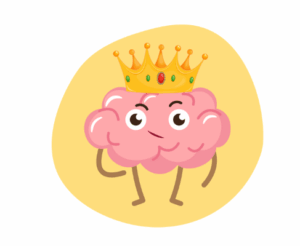
Let’s get this straight—your mind is not a flawless leader.
When you’re anxious, it becomes a loud, dramatic narrator… not a wise one.
Yet many of us treat every thought as if it’s holy truth. We let it guide our actions, shape our moods, and decide what we’re capable of. But the truth? Not every thought deserves that power.
Visual Idea: Imagine physically removing a crown from a statue labeled “MY MIND.” It’s time to stop giving every thought the throne.
Tip 2: Thoughts Are Just Thoughts
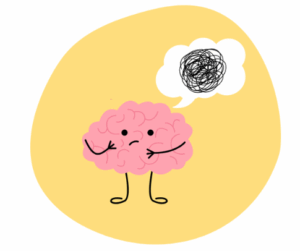
Not facts. Not reality. Just mental noise.
Especially when you’re anxious.
Anxiety loves to whisper things like, “You’re going to fail,” “They’re judging you,” or “Something bad is going to happen.” But just because your brain says it doesn’t mean it’s true.
Quick Practice: Say that scary thought in a cartoon voice. Or say it out loud as if you’re mocking a bad soap opera.
You’ll be amazed how much smaller it sounds.
Visual Aid: Write the thought down on a sticky note—and then tear it up.
Simple. Symbolic. Powerful.
Tip 3: Understand Why Your Brain Does This
Your brain isn’t broken. It’s doing its job—just a little too well.
Fear lives in a part of your brain called the amygdala, and it’s responsible for sounding the alarm when something feels dangerous. Problem is, it doesn’t always know the difference between a real threat and a perceived one.
Like a smoke detector that goes off when you make toast.
There’s no fire – just burnt edges. But the alarm blares anyway.
When you understand that, it becomes easier to take a step back instead of spiraling every time your heart races.
Tip 4: Name the Fear and Ask Questions
Fear grows in silence. But once you name it? You take back control.
Write it down. Make it visible. Ask it questions.
Try this:
- What am I afraid of, exactly?
- What’s the actual likelihood it’ll happen?
- What’s the worst-case scenario—and if that happened, could I survive it?
This simple exercise helps you turn a swirling storm into a clear path forward.
Tip 5: Normalize the Fear
Feeling fear doesn’t make you weak. It makes you human.
Every person you admire has felt afraid at some point. Courage isn’t the absence of fear—it’s choosing to move forward despite it.
Think about someone you look up to. A friend, mentor, public figure. They’ve felt anxious. They’ve second-guessed themselves. And yet… they still showed up.
So can you.

Tip 6: Get Into Your Left Brain
Anxiety thrives in vague, emotional overwhelm.
So let’s get practical.
The “left brain” loves logic, order, and concrete facts. It’s the part of you that can help slow things down and get grounded.
Try These Tools:
- The 5-4-3-2-1 technique: Name 5 things you see, 4 you can touch, 3 you hear, 2 you smell, 1 you taste.
- Journaling: Write out the fear until it feels less foggy.
- Look around the room and name 3 objects out loud.
- Do a gentle body scan: Check in with your breath, shoulders, hands, feet.
These tricks activate the thinking part of your brain and help dial down the fear response.
Tip 7: Don’t Avoid—Expose Yourself Gently
Avoiding what scares you might feel safe in the moment, but long-term? It strengthens the fear.
Exposure—done gradually and gently—is the real antidote.
Real Example:
Imagine someone terrified of glass elevators. They start by just standing near one. Then, they ride it one floor. Then three. Over time, their brain learns: This isn’t dangerous.
The same applies to social situations, tough conversations, or trying something new.
Challenge for You:
What’s one small thing you’ve been avoiding that you could face this week?
One step is all it takes to start weakening the fear loop.
Tip 8: Use Fear as Fuel
Here’s a powerful mindset shift: Fear isn’t the enemy. It’s a signal.
Fear often shines a light on what’s most important to you, revealing what you love and where you’re ready to grow.
Ask yourself:
- What goal is fear standing in front of?
- If I moved through this fear, what would open up for me?
When you stop seeing fear as a block and start treating it as a doorway, everything changes.
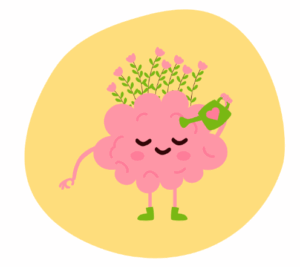
Final Thoughts: You’re Not Stuck—You’re Just Overdue for a Mental Reset
Here’s the truth: You don’t have to eliminate every anxious thought to feel better. You just need the tools to stop letting those thoughts run your life.
Let’s bring it full circle.
Your mind isn’t broken. Your fear isn’t a flaw. And your anxiety doesn’t get the final say.
If you take even one of the tools above and put it into practice this week, you’ll be one step closer to a calmer, more focused mind—and a life that feels less ruled by “what ifs” and more led by confidence.
So the next time you wonder how to remove anxiety and fear from your mind—come back to this list. Start small. Practice often. And know that freedom from fear doesn’t come from ignoring your thoughts—it comes from changing your relationship with them.
You’ve got this.